

Safety systems are not optional features. They are federally mandated components that every manufacturer must design, test, and warrant.
When a seat belt refuses to latch, a pretensioner fails to engage, or an airbag warning light stays on despite repeated dealership visits, those are not minor annoyances. They are defects in the systems your vehicle relies on to protect you.
Under the Texas lemon law, a safety-related defect may qualify for the same remedies as any other documented defect, including manufacturer repurchase or replacement. These claims can also move faster, because Texas law sets a two-attempt threshold for serious safety hazards.
Key Takeaways:
- The Texas lemon law provides an accelerated two-attempt repair threshold for defects likely to cause death or serious injury, including failures of airbag and seat belt systems.
- An airbag warning light that persists after two dealer visits is a documented defect, regardless of whether the airbag has physically failed in a crash.
- Takata airbag inflator recalls affected millions of vehicles, and some Texas vehicles remain unrepaired. Driving an unrepaired recalled vehicle does not waive your legal rights.
- Federal Motor Vehicle Safety Standards (FMVSS) set mandatory performance criteria for occupant protection systems. A vehicle that fails to meet those standards may also support a warranty breach claim under federal law.
- The Texas lemon law statutory period begins at the vehicle’s original purchase date, not the date the defect first appeared.
Why Seat Belt and Airbag Defects Get Treated Differently Under Texas Law
Seat belt and airbag defects can qualify under Texas lemon law after only two failed repair attempts, rather than the four required for most other defects. Texas law carves out this narrower path for defects that present a serious safety risk. Most cases require four documented attempts for the same defect before the statutory presumption applies.
Seat belt failures and airbag malfunctions fall squarely within that category. A seat belt that fails to latch is a core failure of the restraint system your vehicle was warranted to provide.
An airbag that deploys without a collision is a serious malfunction of the restraint system and a documented defect. A supplemental restraint system (SRS) warning light that has been active for weeks indicates the airbag system may not function in a crash at all.
The Two-Attempt Rule and How It Changes Your Timeline
The two-attempt rule shortens your timeline by letting a serious safety defect qualify after two failed repairs instead of four. First, bring the vehicle to an authorized dealer for the same safety-related defect on two separate occasions within the statutory period.
Then, send written notification to the manufacturer, giving one final opportunity to repair. If the defect remains after that final attempt, or if the manufacturer fails to respond, you are eligible to file a complaint with the Texas Department of Motor Vehicles.
The practical effect of this rule is that many seat belt and airbag defect claims mature more quickly than clients expect. In contrast to a standard four-attempt case, these cases can reach the hearing stage within a few months of the second failed repair.
What the Statutory Period Covers
The Texas lemon law presumption applies to vehicles within the first 24 months of service or the first 24,000 miles, whichever comes first. The clock starts at the original purchase or lease date.
It does not restart if the vehicle changes hands, and it does not toll while the vehicle sits at the dealership for service. Those days in the shop count toward the 30-day out-of-service threshold, but they do not stop the 24-month window.
Common Seat Belt and Airbag Defects That Qualify Under Texas Lemon Law
Not every warning light becomes a lemon law case. But specific, documented patterns of seat belt and airbag system failure are the kind of evidence that can support a claim through TxDMV or in federal court under the Magnuson-Moss Warranty Act.
Airbag Warning Light That Will Not Clear
The SRS warning light activates when the vehicle’s self-diagnostic system detects a fault in the airbag circuit. Common causes include sensor failure, clock spring malfunction, faulty control module, or wiring harness issues. When a dealer clears the code and the light returns within days or weeks, that recurring pattern is a documented defect.
Specifically, several Ford, Chevrolet, and Hyundai models have generated a high volume of NHTSA complaints regarding persistent SRS warning lights. If your vehicle model has an open technical service bulletin (TSB) or recall related to the airbag system, that bulletin becomes critical evidence in your claim.
Seat Belt Pretensioner and Load Limiter Failures
Pretensioner and load limiter failures can qualify under Texas lemon law because these restraint components engage when a vehicle’s sensors detect a collision. When either one fails, the seat belt does not perform the way the manufacturer warranted it would. These failures are often invisible until a crash occurs.
However, some pretensioner failures can be diagnosed before a crash. Fault codes stored in the SRS control module, clicking or grinding sounds when the belt retracts, or a belt that does not retract fully are all detectable symptoms that can be documented in a service record.
Spontaneous Airbag Deployment
Airbags deploying without a collision event present an immediate danger to the driver and any occupants. Spontaneous deployment typically stems from sensor malfunction, a shorted airbag circuit, or faulty clock spring components. These incidents generate police reports, injury records, and often NHTSA complaints from other owners of the same model. That external documentation is directly relevant to your lemon law case.
Non-Deployment in a Crash
When an airbag fails to deploy during a collision that should have triggered it, that non-deployment is a documented defect in the occupant protection system. Texas lemon law addresses the warranty relationship between you and the manufacturer, focusing on whether the vehicle conforms to its written warranty. If you are weighing other legal options after a crash, we can help you understand where the lemon law and warranty piece fits.
The Takata Recall and Texas Vehicles Still on the Road
 The Takata airbag recall represents the biggest auto recall historically in the U.S. Defective inflators can rupture upon deployment, sending metal fragments into the vehicle cabin. According to the most recent NHTSA data, millions of vehicles nationwide remain unrepaired despite being under active recall.
Texas has one of the highest concentrations of Takata-affected vehicles in the country, partly because of the state’s size and vehicle market, and partly because of the climate. High heat and humidity accelerate the chemical degradation of the ammonium nitrate propellant inside the inflator.
Central Texas summers, with prolonged periods above 100 degrees Fahrenheit, create conditions that manufacturers identified as among the highest risk.
What Texas Drivers Should Know About Recalled Airbags
If your vehicle is under an active Takata recall and the dealer cannot provide replacement parts, you may have rights beyond simply waiting. Manufacturers are legally required to provide a remedy within a reasonable period of time. Prolonged unavailability of parts, combined with the ongoing safety risk, has supported consumer claims under both Texas law and the Magnuson-Moss Warranty Act.
Driving a recalled vehicle does not forfeit your rights. Continuing to use a vehicle while waiting for recall parts is a practical necessity, not a legal waiver.
Answers to Your Questions – From The Lemon Lawyers
My airbag light has been on for three months. The dealer cleared it twice, and it came back. Do I have a lemon law case?
That pattern, two dealer visits for the same SRS fault with no lasting fix, is exactly the two-attempt threshold under Texas law for defects likely to cause death or serious injury. You may already be at the stage where written notification to the manufacturer is the appropriate next step. Call us at (512) 387-3510, and we will review your service records.
The airbag light is on, but the car has never been in a crash. Is that still a defect?
Yes. The SRS warning light indicates the system has detected a fault. A fault in the airbag system may mean the airbag does not deploy correctly in a future collision. You do not need to have been in a crash to have a documented defect. The warning itself is the defect.
What if my seat belt works, but the airbag module is the problem?
Each component in the occupant protection system is evaluated separately. A malfunctioning airbag module is a defect in its own right, independent of whether other restraint components are functioning normally. The claim is based on the specific defective system.
My vehicle is outside the 24,000-mile lemon law window. Am I out of options?
Not necessarily. The Magnuson-Moss Warranty Act allows warranty breach claims in federal court when a written warranty has not been honored. If the defect was first reported within the original factory warranty period and the manufacturer failed to fix it, the federal path may be available regardless of the lemon law statutory period.
Can I file a lemon law claim and also pursue a personal injury claim if I was hurt?
Yes. They serve different purposes and run on separate tracks. A Texas lemon law claim addresses the manufacturer’s warranty obligation for a defective vehicle, while a personal injury matter is a separate case with its own evidence and deadlines. We focus on the lemon law and warranty side and can help you see where it fits before you take your next step.
Ask The Lemon Lawyers: Is a dashboard warning light really enough for a claim?
A single warning light is not automatically a lemon law case. What matters is the pattern: the same safety-related fault documented across repeated repair visits the dealer cannot resolve. If your airbag or seat belt warning has returned after two repair attempts, that documented history may support a claim. Call us at (512) 387-3510 for a free review of your service records.
Ensuring Your Rights are Safeguarded After a Safety System Failure
The record you build in the first 60 days after a safety defect appears often determines the outcome of your claim.
- File a complaint with NHTSA at nhtsa.gov immediately after a spontaneous airbag deployment or a clear seat belt failure event. Federal complaints create a public record and may trigger NHTSA’s own investigation.
- Bring the vehicle to the dealer in writing, whether by email or a written repair request, so there is documentation of the date and the specific defect you reported.
- Ask the service advisor to note the SRS fault code in the repair order, not just the symptom. “Airbag light on” is less specific than “SRS Module fault code B1231 logged.”
- Request a loaner vehicle if the defect makes the car unsafe to drive. Many Texas dealers are contractually required to provide loaner vehicles during warranty repairs.
- Do not accept a verbal assurance that the system is working correctly. If the light returns, a follow-up documented service visit is what matters.
- Consult with a Texas lemon law attorney after the second failed repair attempt for a safety-related defect. The statutory window moves quickly.
Many claimants find it helpful to photograph the dashboard warning light on their phone before each dealer visit. The photo captures the date, time, and the active fault light, creating a visual log that supplements the service record.
How We Build a Safety Defect Lemon Law Case in Texas
The Lemon Lawyers have handled airbag and seat belt defect claims across Central Texas. The cases that move fastest share one thing in common: plain documentation of the repair history.
We start with your service records.
Every repair order, every “no fault found” notation, and every communication with the manufacturer’s customer service line is relevant. We then cross-reference your vehicle’s make, model, and production date against NHTSA complaint databases and any active or historic recalls. That external data supports your claim, independent of what the dealer’s technicians wrote in the service bay.
If the vehicle falls within the lemon law period, we prepare the written manufacturer notification and handle the TxDMV complaint process on your behalf. If the vehicle falls outside that period but is still within the manufacturer’s warranty, we evaluate the Magnuson-Moss Act.
We handle these cases on contingency. Under the Texas lemon law, prevailing consumers may also be entitled to attorney fees, which means the manufacturer may ultimately pay our fees directly.
The Warning Light Was Not the Problem. The Problem Is What It Represents.
What the Persistent SRS Light Is Actually Telling You
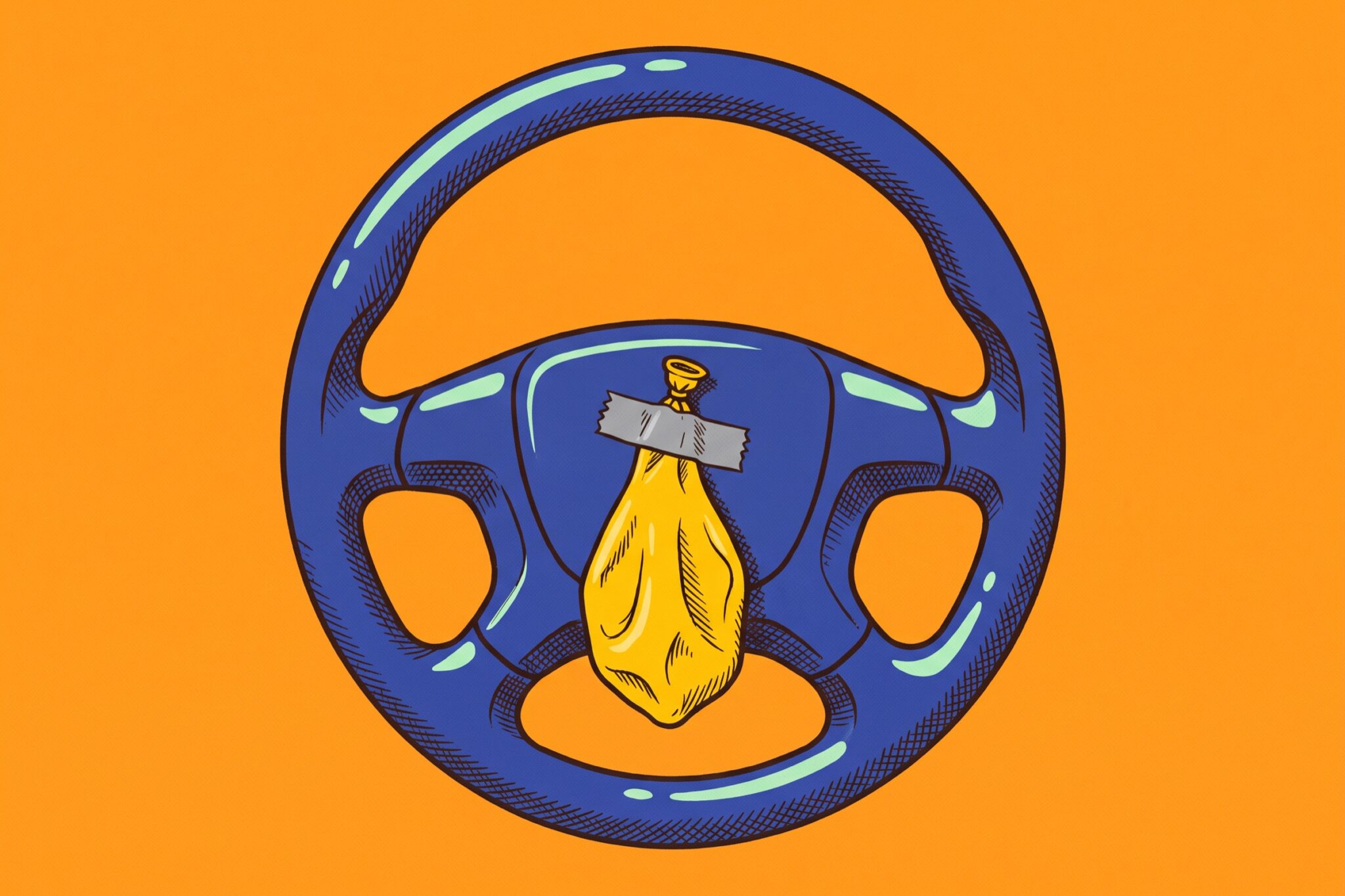
Many drivers accept dashboard warning lights as a feature of aging vehicles. Some turn up the radio. Some put a piece of tape over it. But an SRS warning light is not an inconvenience. It is the vehicle’s way of telling you that the system designed to keep you alive in a collision may not be working as designed.
Texas roads are unforgiving. I-35 through Austin and San Antonio consistently ranks among the most dangerous stretches of highway in the country. If your airbag or seat belt system is compromised, you are driving that stretch without the full protection your vehicle was sold with.
You paid for a safe vehicle. If the manufacturer’s warranty system has not delivered one, Texas lemon law gives you a documented, procedural path to demand something better.
Learn More About Your Lemon Law Rights in Texas Now
 Call The Lemon Lawyers at (512) 387-3510 or fill out our contact form. We offer free case reviews and handle airbag and seatbelt defect claims on a contingency basis. Send us your service records, and we will tell you exactly where your case stands.
The conversation is free. The clarity and peace of mind are worth more than that.